How to Stop Sports Betting
If watching the game and betting on the game have become the same habit, stopping often means changing more than the wager. You need a plan for access, money, match-day triggers and the betting routine itself.
Notice how betting became part of the game
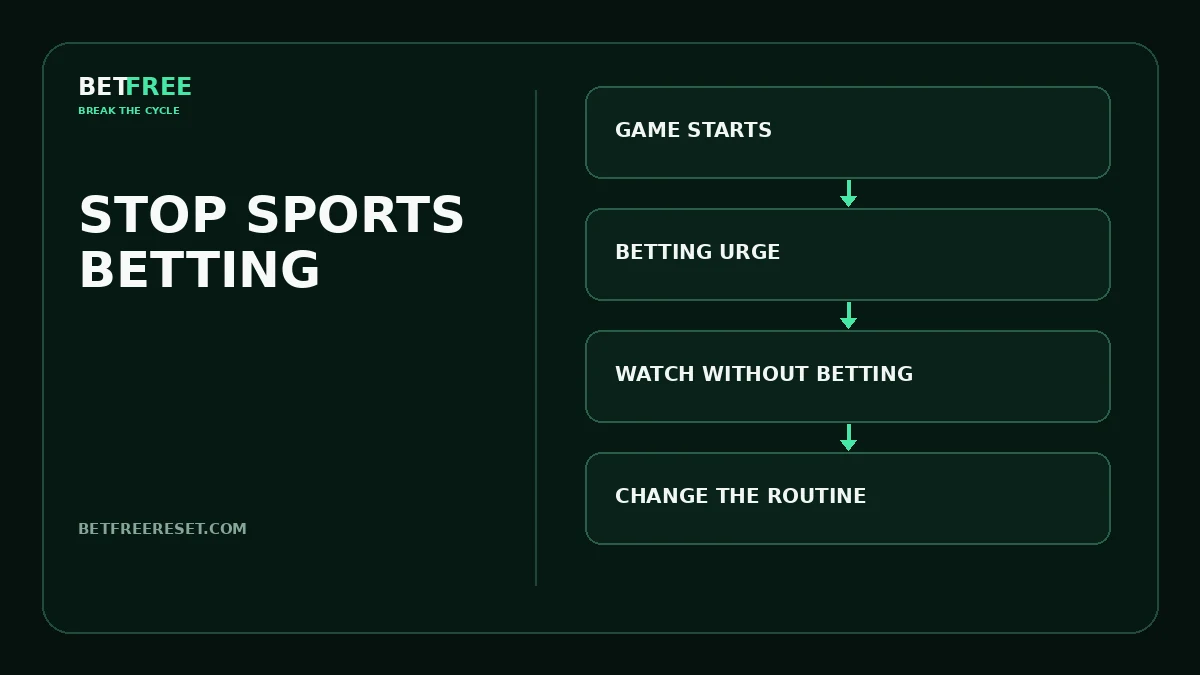
Sports betting can attach itself to routines: checking odds in the morning, following tipsters, building accumulators, live betting, or feeling that a match is boring without money on it. Identify which parts of your sports routine now trigger betting.
Separate watching from wagering
Try watching selected games without opening odds, betting apps or tipster feeds. If that feels unusually uncomfortable, treat the discomfort as useful information rather than a reason to place a small bet.
Remove bookmaker access
Use account limits, blocking tools or self-exclusion options available to you. Log out, remove saved payment methods where possible, and reduce the number of betting prompts reaching you through notifications, email and social media.
Build a match-day plan
Decide before kickoff what you will do during the periods that usually trigger betting. Before the game: remove access. During: keep betting apps closed. Halftime: avoid live odds. After: do not use the result as a reason to chase or “celebrate” with another bet.
Replace the betting ritual
The habit may include research, predictions, checking prices and discussing bets—not just placing them. Replace some of that ritual with fantasy sports without money, match analysis, exercise, gaming, social plans or another activity that does not lead back to wagering.
Plan for the urge after a result
A bad result can trigger chasing; a good result can trigger confidence and larger bets. Both can pull you back in. Use your urge plan before making a decision after either outcome.
Make your next match different
The BETFREE 30-Day Gambling Reset gives you a daily structure for barriers, triggers, urges and replacement routines.
Explore the 30-Day ResetKeep going with BETFREE
Continue with Gambling Triggers · Gambling Urges · Chasing Losses, or explore more practical guidance in Free Resources.