⏸
First 60 seconds
Close gambling access, put the phone down, avoid deposits or transfers and start a 20-minute delay.
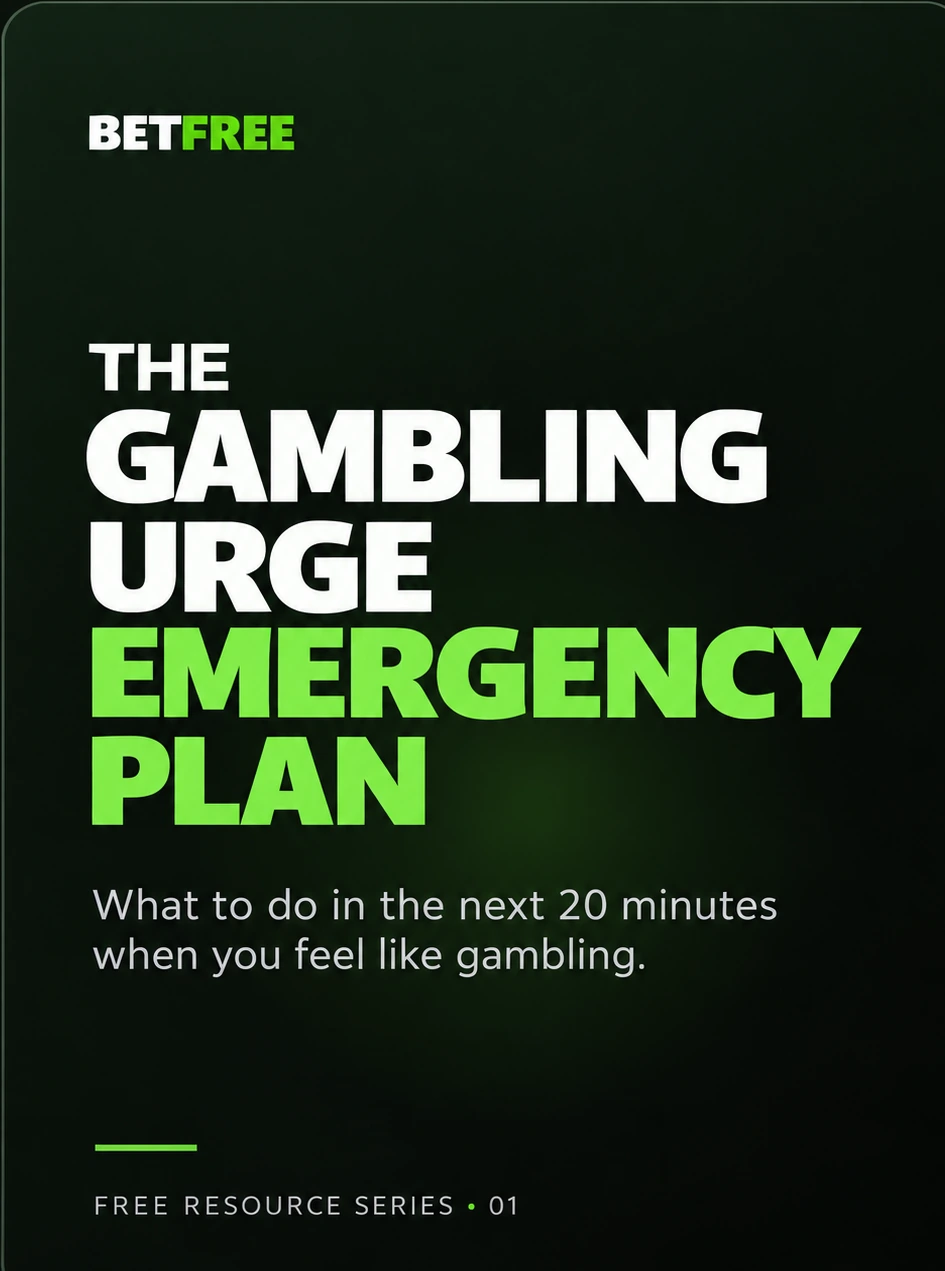
Get the free Gambling Urge Emergency Plan — a practical 15-page guide designed to help you pause, create distance and avoid the next impulsive decision.
The PDF is designed to be practical when your attention is narrow and the urge feels immediate.
Close gambling access, put the phone down, avoid deposits or transfers and start a 20-minute delay.
Work through four short stages: distance, interrupt, identify and reassess.
Notice what happened before the urge, what you felt and what thought appeared.
Add friction around gambling apps, money, promotions and other easy routes back to betting.
If you already gambled, stop the sequence before one loss becomes another bet.
Complete your own trigger, first action, waiting time, support contact and reason for not gambling.
Get the 15-page plan sent to your inbox so it is there when you need it.
An urge can feel urgent without requiring an immediate response. The goal is to create enough space for the next decision to become less automatic.
Close the app or site. Move away from the gambling environment and available money.
Walk, shower, make a drink, change rooms or contact someone you trust.
Name the trigger, the feeling and the thought that appeared before the urge.
Rate the urge again. You are measuring change, not demanding perfection.
Gambling urges often arrive as a fast chain of trigger, thought, emotion and action. Creating a pause makes that chain easier to see.
Stress, boredom, access to money, sports, advertising, a previous loss or a previous win can all narrow attention toward gambling.
The objective is not to argue with every thought. It is to delay the gambling decision long enough to choose a different next action.
For more detail, read How to Manage Gambling Urges.
Removing shortcuts, logging out, changing access to money, muting gambling promotions, blocking software and self-exclusion can all create valuable time.
Layered barriers are useful because they reduce how many immediate decisions you have to make during a high-risk moment.
Learn more about identifying gambling triggers.
A trigger does not have to force a bet. Naming it gives you a place where the pattern can be interrupted.
One gambling episode does not require another. Stopping the sequence now still matters.
Past losses do not make the next wager more likely to recover them. A new bet creates a new risk.
If a setback has already happened, read Gambling Relapse: What to Do After a Setback.
Use the free plan for the immediate moment, then learn more about the pattern behind the urge.
This resource is general educational self-help information, not diagnosis or treatment. Gambling-related harm can involve debt, severe distress, relationship problems or safety concerns. Use reputable gambling-harm services available in your country or seek appropriate professional help when needed.
BETFREE is a self-guided educational resource. If gambling is causing serious financial, emotional or relationship harm, consider additional professional or local support alongside self-help tools.
Add BETFREE as a Preferred Source to help Google show you more of our gambling-recovery guides and resources.