Gambling Triggers: Find the Pattern Before the Bet
A trigger is anything that increases the pull toward gambling. Triggers can come from your environment, emotions, thoughts, routines or access to money.
Common types of triggers
Situations
Payday, watching sport, being alone at night, visiting certain places or spending time with people connected to gambling.
Emotions
Stress, boredom, frustration, loneliness, excitement or the wish to escape from an uncomfortable mood.
Thoughts
“I can win it back,” “one small bet won’t matter,” or “this opportunity is different.”
Use a trigger log
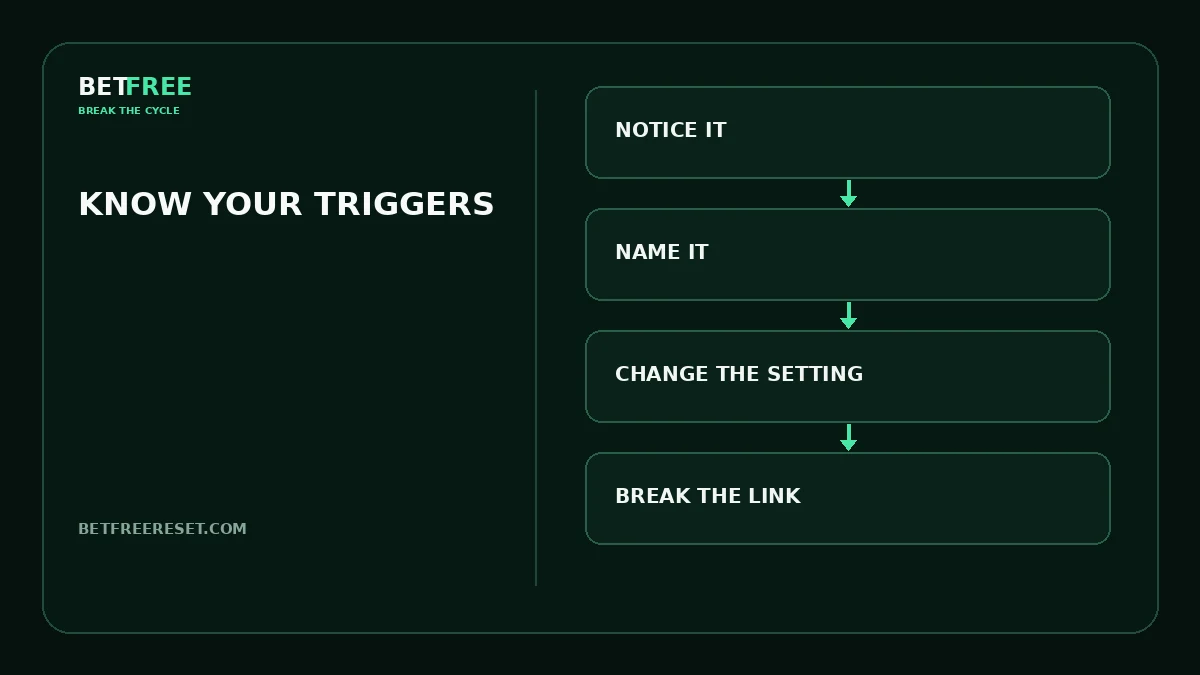
When an urge appears, record four things: what happened, what you were feeling, what you were thinking and what action you took. Patterns become easier to change when they are visible.
Reduce predictable exposure
If certain apps, notifications, accounts, venues or routines repeatedly trigger gambling, reduce the exposure where practical. Gambling support services commonly recommend making gambling harder to access and identifying the situations, thoughts and feelings that lead to strong urges.
Build a response for each trigger
A trigger plan should be specific. “I will be stronger” is vague. “When I feel the urge after watching a match, I will close the betting app, text a friend and take a 20-minute walk” is an action plan.
Reference basis: GamCare self-guided recovery resources and NHS gambling-service self-help guidance.
Turn a trigger into a planned response
A trigger is more useful when it leads to a specific plan. If payday is the pattern, use Payday Protection. If the trigger is an immediate urge, use Urge Breaker. If easy access is the problem, strengthen self-exclusion and your barriers.
Want a structured next step?
BETFREE turns the ideas on this page into a practical 30-day routine focused on awareness, barriers, replacement habits and reflection.
See the 30-Day ResetKeep going with BETFREE
Continue with Gambling Urges · Gambling Relapse, or explore more practical guidance in Free Resources. · How to Stop Sports Betting