What Happens When You Stop Gambling? The First 30 Days
Stopping gambling does not mean every urge, trigger or gambling thought immediately disappears. The first month can instead be used to create barriers, understand patterns and build a different daily structure.
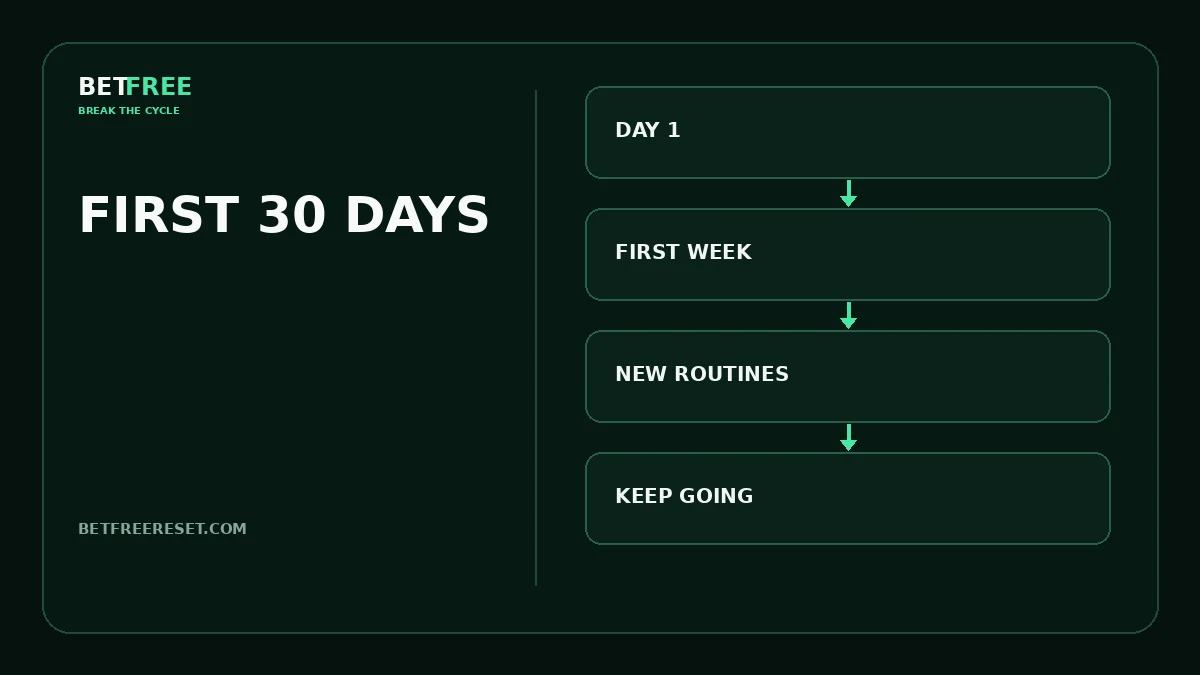
The first month is not a fixed recovery timeline
People experience stopping gambling differently. Some notice immediate relief; others notice strong urges, restlessness, regret about money or repeated thoughts about betting. Rather than expecting a specific feeling on a specific day, use the month to make gambling less accessible and your next decisions more deliberate.
Having an urge right now?
Do not wait for a 30-day plan to deal with the immediate moment. Start with the free BETFREE Gambling Urge Emergency Plan.
Get the Free Emergency Plan →If you want a simple reference point while the days add up, use Time Since Last Bet. It shows the time already protected and the next milestone without turning the number into a score.
Days 1–3: create distance
Start by reducing easy access. Log out, remove saved payment methods where possible, use gambling blocks or self-exclusion tools available to you and protect money needed for essentials. The fewer immediate routes back to gambling, the fewer decisions you have to fight in a high-risk moment.
Days 4–7: notice the pattern
Pay attention to what happens before gambling thoughts appear. Common cues can include boredom, stress, loneliness, payday, alcohol, sporting events, advertising, recent losses or simply being alone with unrestricted access to money.
Week 2: replace the gambling routine
Stopping creates empty spaces. A match you used to bet on, an evening spent checking odds or a payday routine may suddenly have no replacement. Plan something specific for those windows rather than relying on “I just won't gamble.”
Week 3: strengthen money barriers
Review where gambling money previously came from. Separate essential bills, consider banking gambling blocks where available, remove easy deposit routes and avoid treating previous losses as money that still needs to be won back.
Week 4: review what actually helped
Look at the month as information. Which triggers appeared most often? Which barriers worked? Where was access still too easy? Which replacement activities were realistic enough to repeat? Use those answers to decide what structure you need next.
Want structure beyond the immediate urge?
The BETFREE 30-Day Gambling Reset is a structured educational program designed to help you step away from gambling, identify patterns and work through practical daily actions.
Explore the 30-Day Reset →Digital program · $29.99
What if you gamble during the 30 days?
A setback does not require turning one gambling episode into another week of gambling. Stop the sequence, protect remaining money, identify what happened immediately beforehand and rebuild the barrier that failed. If you need more support, involve a qualified service or professional rather than trying to manage escalating harm alone.