I Self-Excluded but Found Another Way to Gamble — What Now?
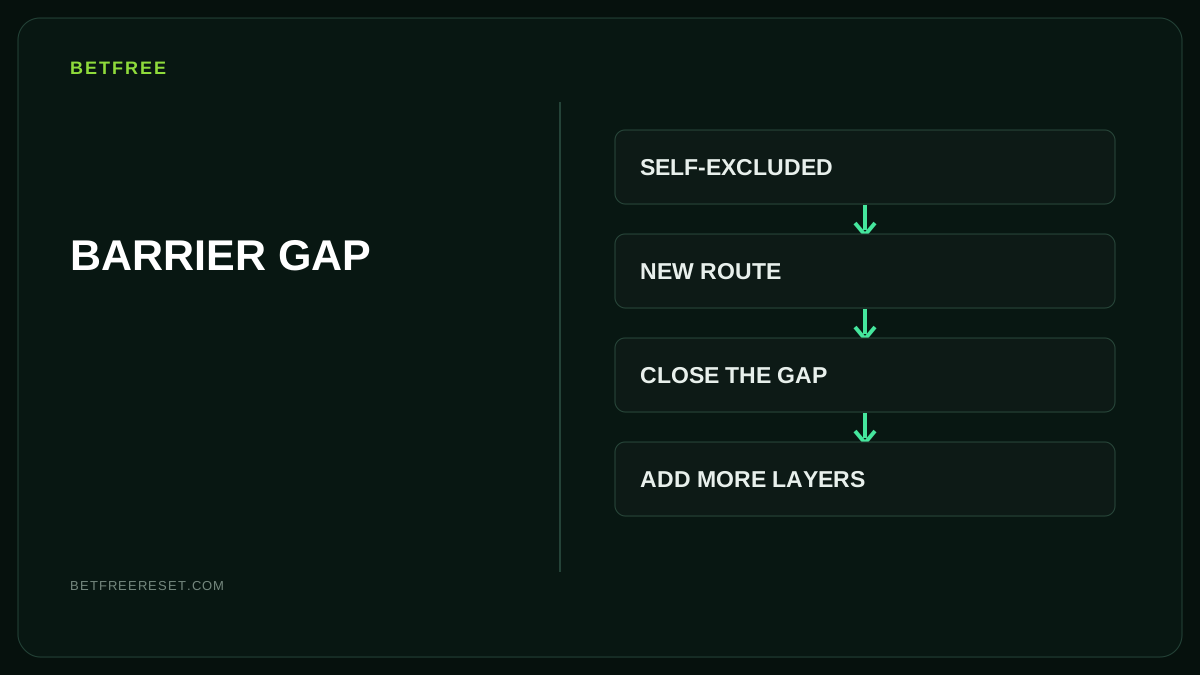
Finding another route after self-excluding does not mean barriers are pointless. It means the protection system still has a gap that needs to be identified and closed.
1. Identify exactly how gambling access reopened
Start with the route, not the self-judgment. Was it another operator, a different website, a new app, another device, a payment method, crypto, a friend’s account, a tipster link or an offshore site that was not covered by the original exclusion? The answer tells you which barrier failed.
2. Strengthen the device and account layer
If the route was a new site, browser or app, consider device-level blocking and broader self-exclusion options that apply in your location. Log out of accounts, remove gambling apps and make it harder to move from an urge to an open betting screen.
3. Strengthen the payment layer
If the route reopened through a card, bank transfer, digital wallet, credit or crypto, review which payment options are still available. Remove stored payment details where possible and consider banking gambling controls that your provider offers.
4. Reduce the trigger routes that lead back to access
Marketing emails, SMS offers, odds apps, tipster groups and betting chats can reopen the path before a gambling site is even visited. Unsubscribe, mute or block the routes that repeatedly move you from a trigger into searching for somewhere to gamble.
5. Layer barriers instead of relying on one control
Self-exclusion can be one layer. Device blocking, banking controls, payment friction, account removal and social changes can add others. The goal is not a perfect single barrier; it is a system where one weak point does not immediately give you full access again.
6. If gambling already happened, repair the route that failed
Use Relapse Reset to identify what reopened and what needs to be repaired now. If the urge is still active, use the Emergency Plan before spending time trying to fix every part of the system at once.
Why bypassing can happen after self-exclusion
Self-exclusion removes an important route, but the urge to gamble can still look for another one. That does not make the barrier useless. It means the recovery system needs another layer around the route that reopened.
When the urge starts searching for another route
Searching for offshore sites, crypto gambling or another account can be an early warning sign. Stop before money moves and use Barrier Builder to identify the new route.
Protect access to money
Move essential money away from immediate gambling access where practical, remove stored payment shortcuts and tell someone you trust what happened. If the financial damage is already serious, start with Money & Debt.
If you are considering offshore or crypto gambling
Do not use the thought as a reason to test whether your existing exclusion can be bypassed. Read what to do before a crypto-casino deposit and use the Crypto & Offshore Gambling recovery hub.
After a relapse
Stop the session, protect what remains and change the barrier that failed. The Relapse Reset can help you turn the event into a concrete next step rather than a longer return to gambling.
Useful next steps
Use only the resources that match what is happening now.
BETFREE provides educational self-help information and is not a gambling-blocking or self-exclusion provider. Available controls differ by operator, bank, device and country.