How Long Does a Gambling Urge Last? What to Do While It Passes
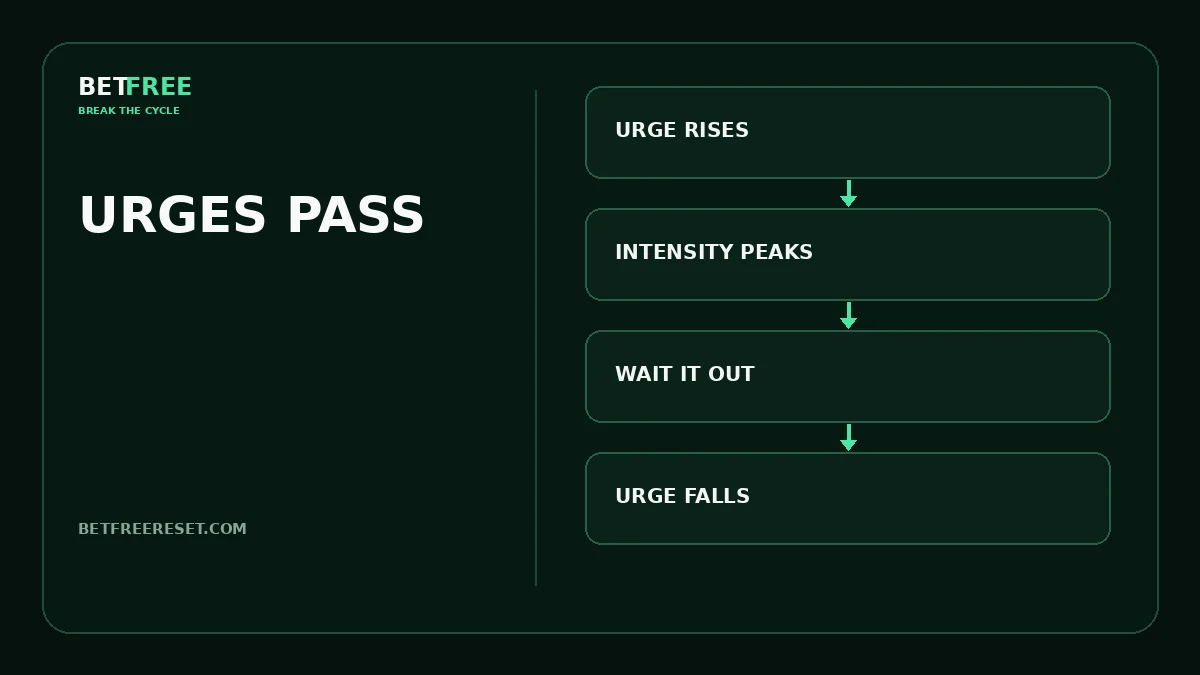
There is no single timer that applies to every gambling urge. What matters is that an urge can change in intensity, and you can use that changing window to avoid an impulsive decision.
There is no universal length for a gambling urge
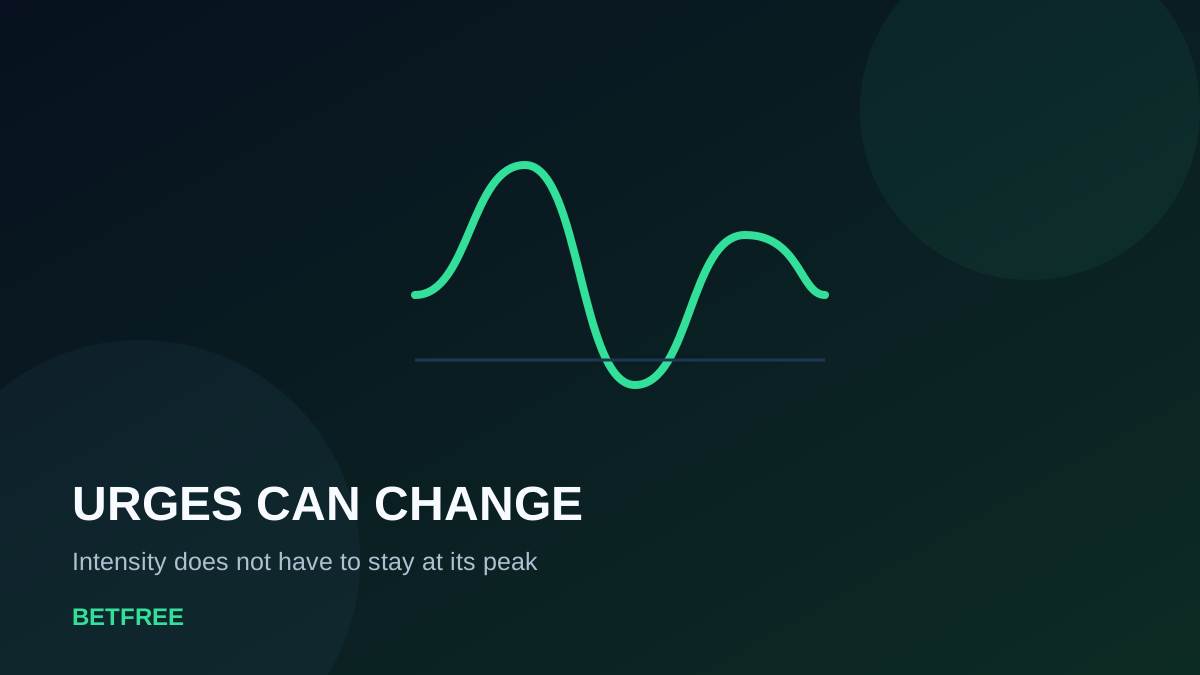
An urge may arrive suddenly, build around a trigger, fade and then return later. Its intensity can also change depending on access to money, stress, alcohol, sports events, recent losses and the environment around you. That is why a fixed promise such as “every urge disappears after exactly X minutes” would be misleading.
Why a short time window can still help
You do not need to know exactly when the urge will disappear to create a useful delay. A short no-bet window gives you something concrete to do: stop the immediate action, change location, reduce access and allow the intensity to change before you reassess. Urge Breaker now includes a built-in 10-minute delay for exactly that moment.
Start with the next 20 minutes
The free BETFREE Gambling Urge Emergency Plan is designed for the immediate decision window. It gives you practical steps to create time and distance before another bet.
Get the Free 20-Minute Plan →What to do while the urge is strong
Do not keep the betting app open while waiting for the feeling to change. Close it. Move away from the device or venue. Make money harder to reach. If possible, tell someone what is happening. The goal is to reduce the number of easy routes from feeling the urge to acting on it.
What if the urge comes back?
A returning urge does not mean the earlier pause failed. Repeat the process. Each return can also reveal a pattern: a particular match, time of day, account balance, emotion or notification may be repeatedly pulling you back toward gambling.
Look for repeated triggers, not just individual urges
If urges repeatedly appear in similar situations, the longer-term task becomes changing those situations. That might mean blocking gambling access, changing sports-viewing routines, adding banking restrictions, avoiding certain environments or creating a plan for payday and other high-risk moments.
The useful question is not “When will this disappear?”
A more practical question is: “What can I change before I act on it?” You may not control when an urge appears, but you can make the path from urge to bet longer and more difficult.